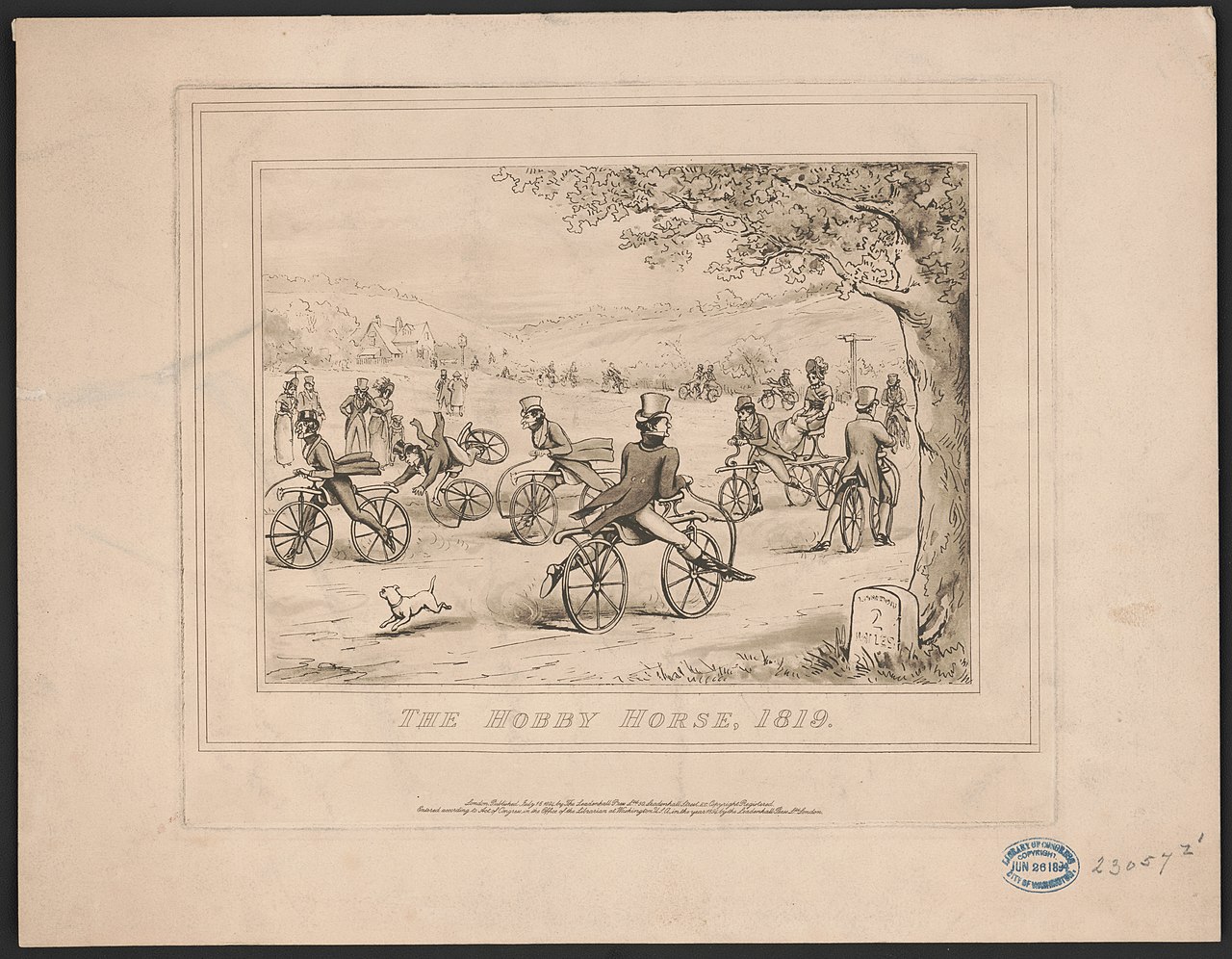
the dandy horse
Karl von Drais bolts two wheels to a beam and pushes off with his feet. No pedals, no chain — just balance and steering, the two ideas every bicycle since has kept. It reaches London in 1819, where fashionable young men ride it and the papers name it the dandy horse.
It is older than photography itself — the earliest bicycle can only be shown as a drawing.
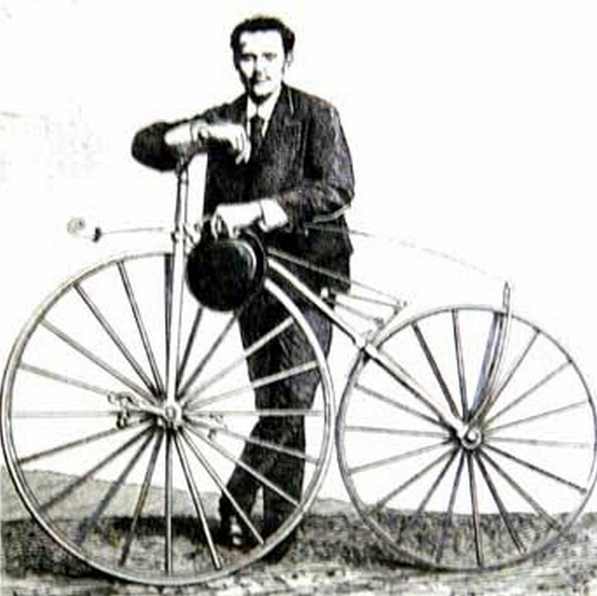
the boneshaker
The Michaux workshop cranks pedals straight onto the front hub — now you drive it. But the frame is wrought iron, the wheels are wood banded in metal, and the streets are cobblestone. It rattles every bone you own, and everyone calls it exactly that: the boneshaker. In 1868 the first races are run on it.
The first bike that goes on its own. It just punishes you for the privilege.
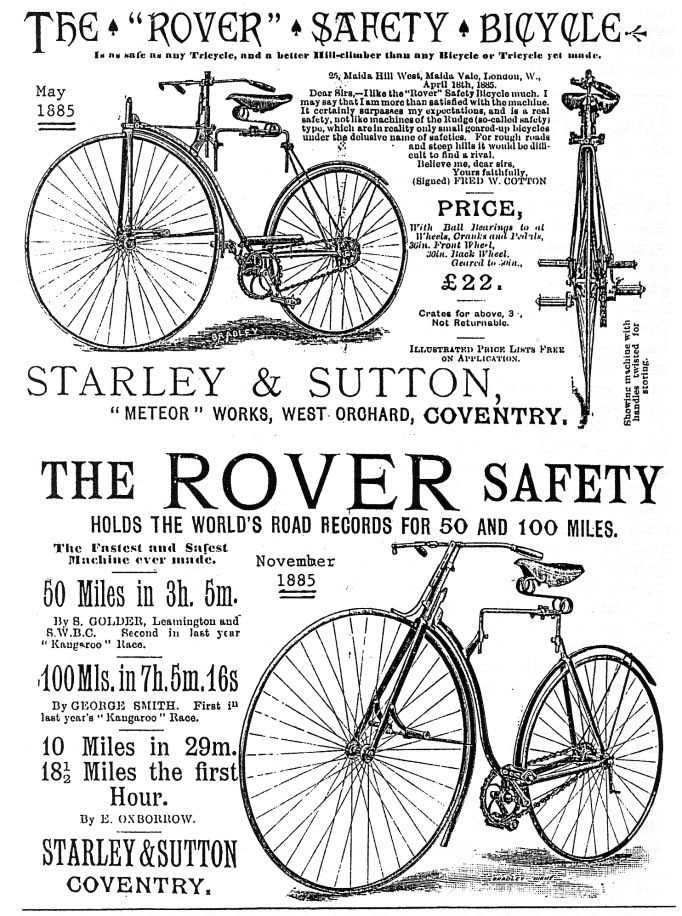
the safety
For a decade in between, riders had perched atop the towering penny-farthing and pitched off it head-first. Then John Kemp Starley builds the Rover: two equal wheels, a diamond frame, a chain driving the rear. They market it as the safety bicycle — and it becomes the shape every bike still copies.
Three years on, in 1888, Dunlop wraps the wheels in air. The template is finished.
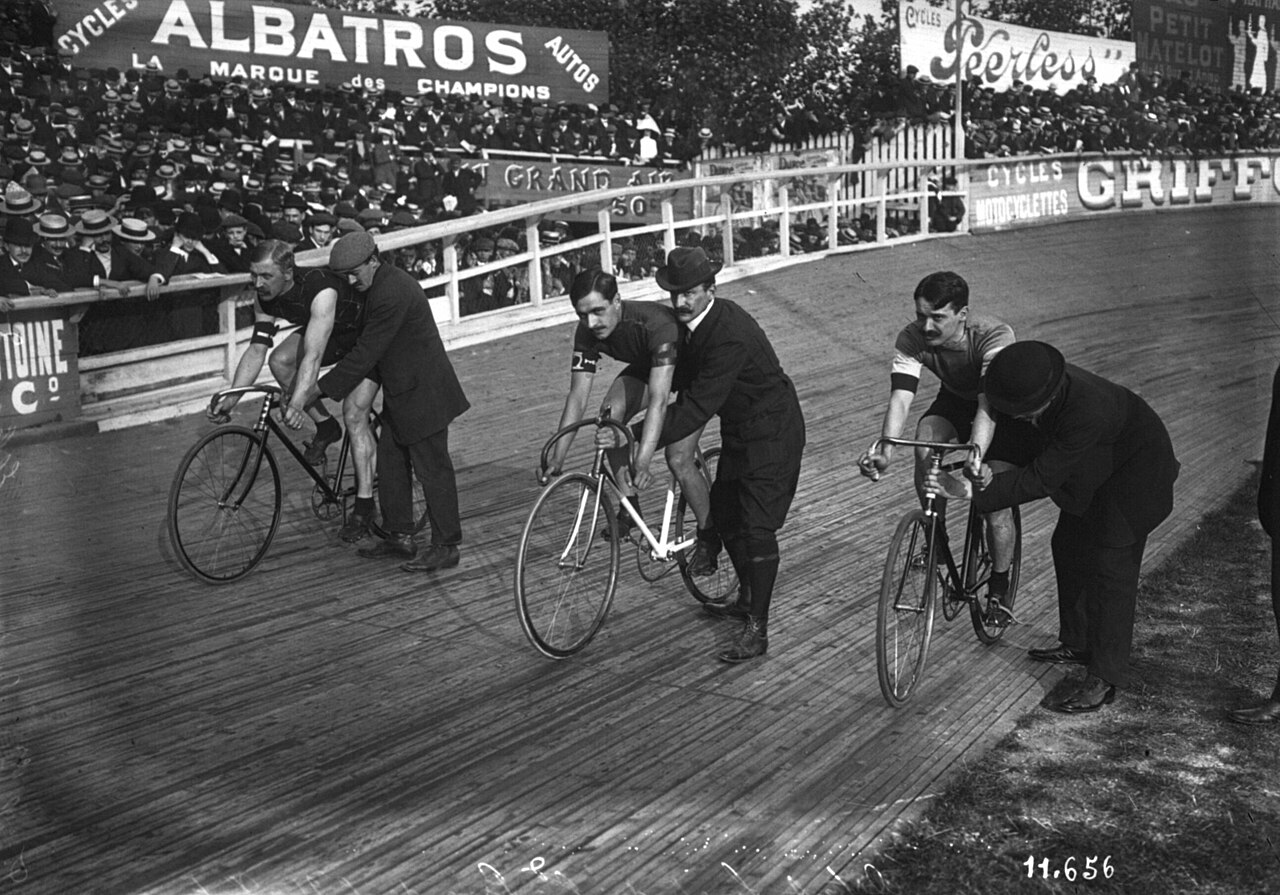
flywheel
For all these decades the drivetrain was fixed: the rear cog bolted fast, so pedals and wheel turned as one and you could never stop pedalling. On the packed velodromes of the 1890s that constraint became a sport. Legs and machine are a single flywheel, storing momentum and giving it back — the track still rides fixed to this day.
The original condition of the bicycle: no coasting, no rest.
the coaster
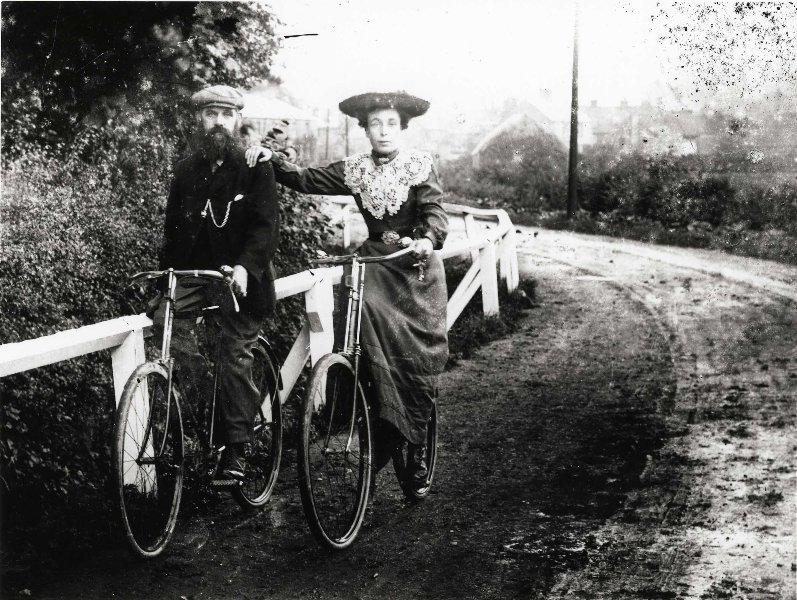
Then a single clever hub breaks the lock. The coaster brake lets the rear wheel spin free while your feet rest, and brakes when you pedal backward. No hands, no extra lever — you stop churning, you glide, and a push back on the pedals brings you to a halt.
The moment the machine stops demanding your legs every second.
freewheel
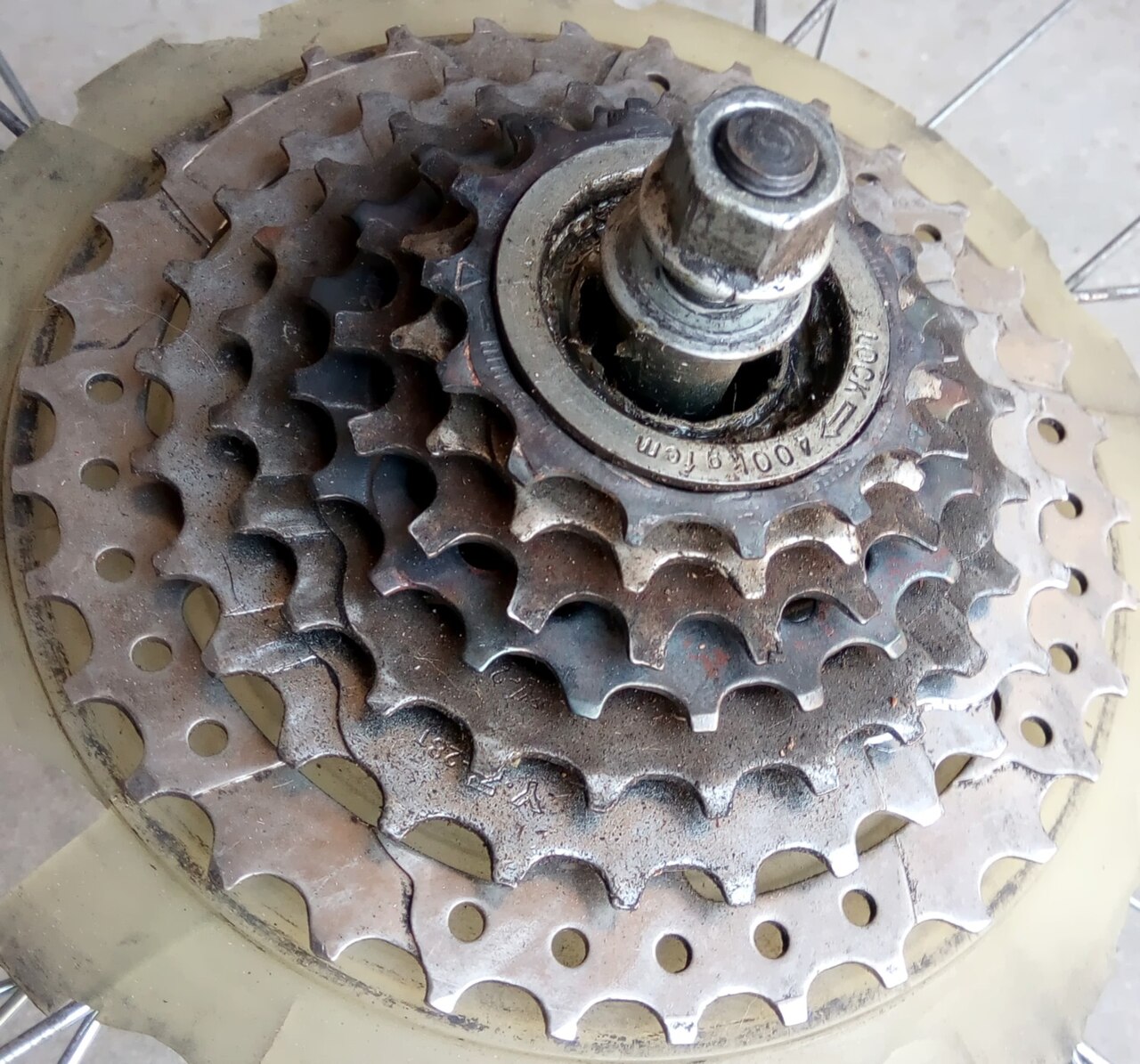
Underneath the coaster sits the part that made it possible: a ratchet that lets the wheel outrun the pedals. The freewheel is what ended the fixed-only world — the quiet tick-tick-tick you hear when a rider lifts their feet and simply rolls. Small, cheap, and the difference between a machine that needs you and one that carries you.
The freedom to stop pedalling and still go somewhere. It was there almost from the start.
slipstream
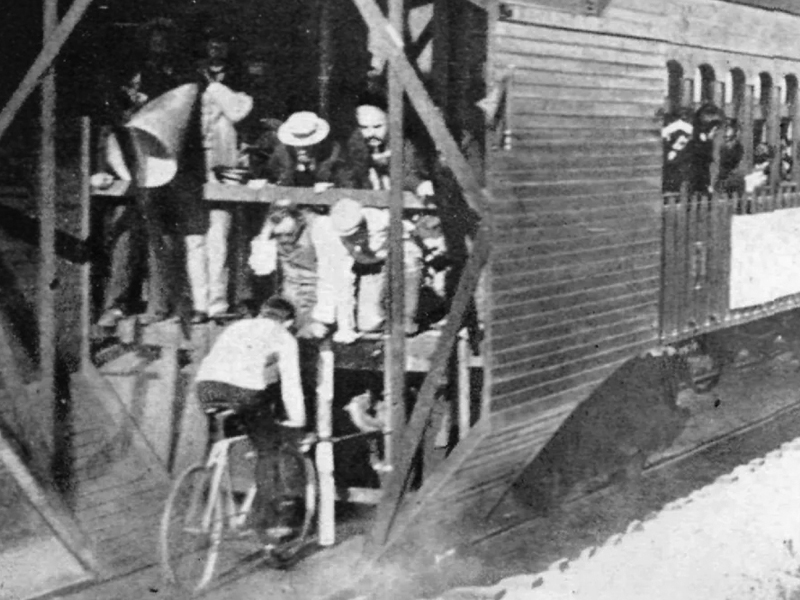
Charles Murphy has a plank track laid between the rails of the Long Island Rail Road, tucks in behind a boarded-up train car, and rides a mile in 57.8 seconds — a mile a minute, on a bicycle, in 1899. He proved what racers had guessed: air is the real enemy, and the slipstream behind another body can save you nearly a third of the work.
The first move that isn't about the bike at all. It's about the air.
the peloton
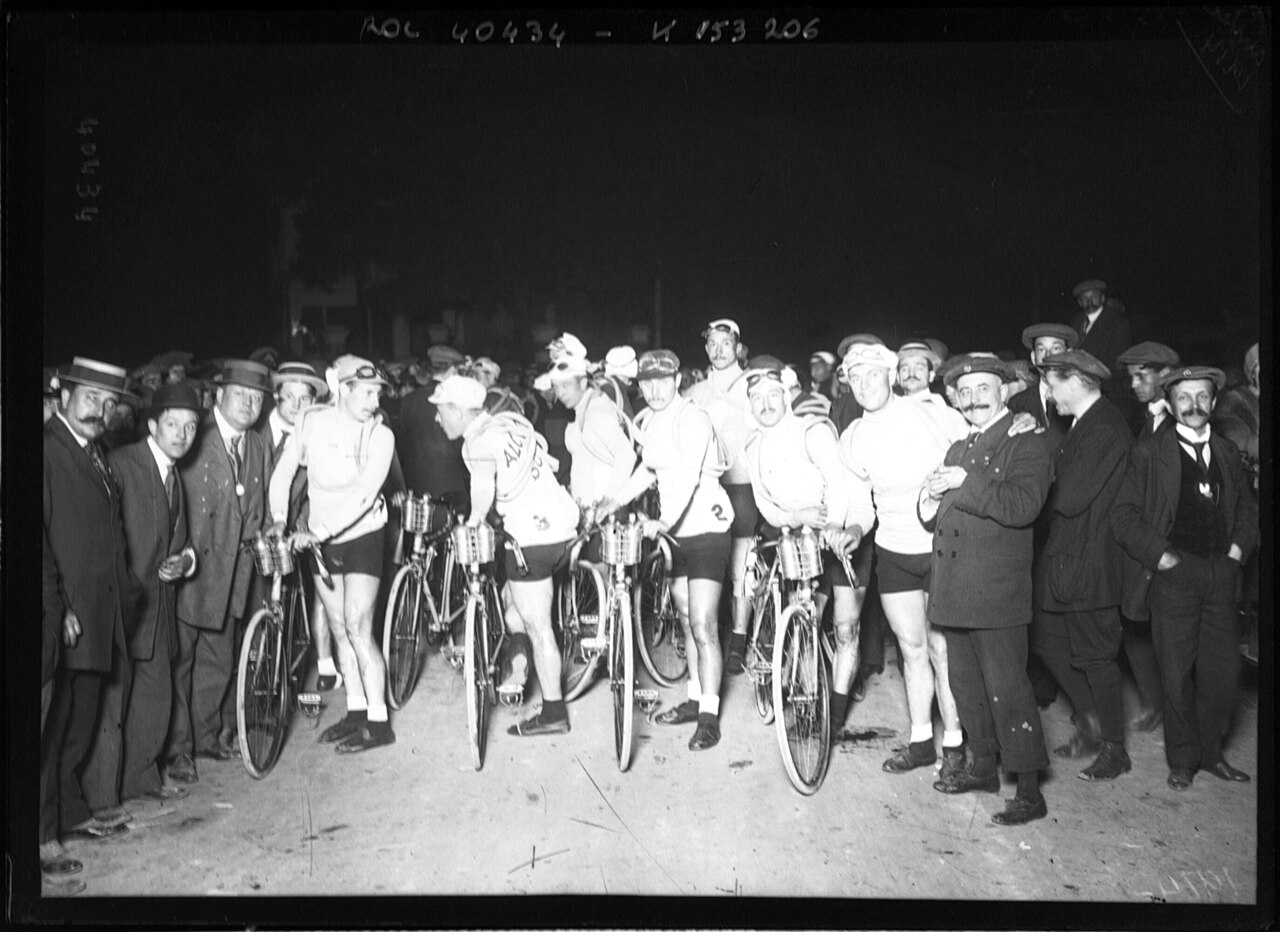
In July 1903 a newspaper sends sixty riders around France to sell copies, and the Tour is born. Put all those slipstreams together and the pack becomes one body — the peloton, from the French for a little platoon. It flows, splits, and re-forms, riders trading the front so no one burns alone.
The machine was for one rider. This is what happens when there are two hundred.
torque
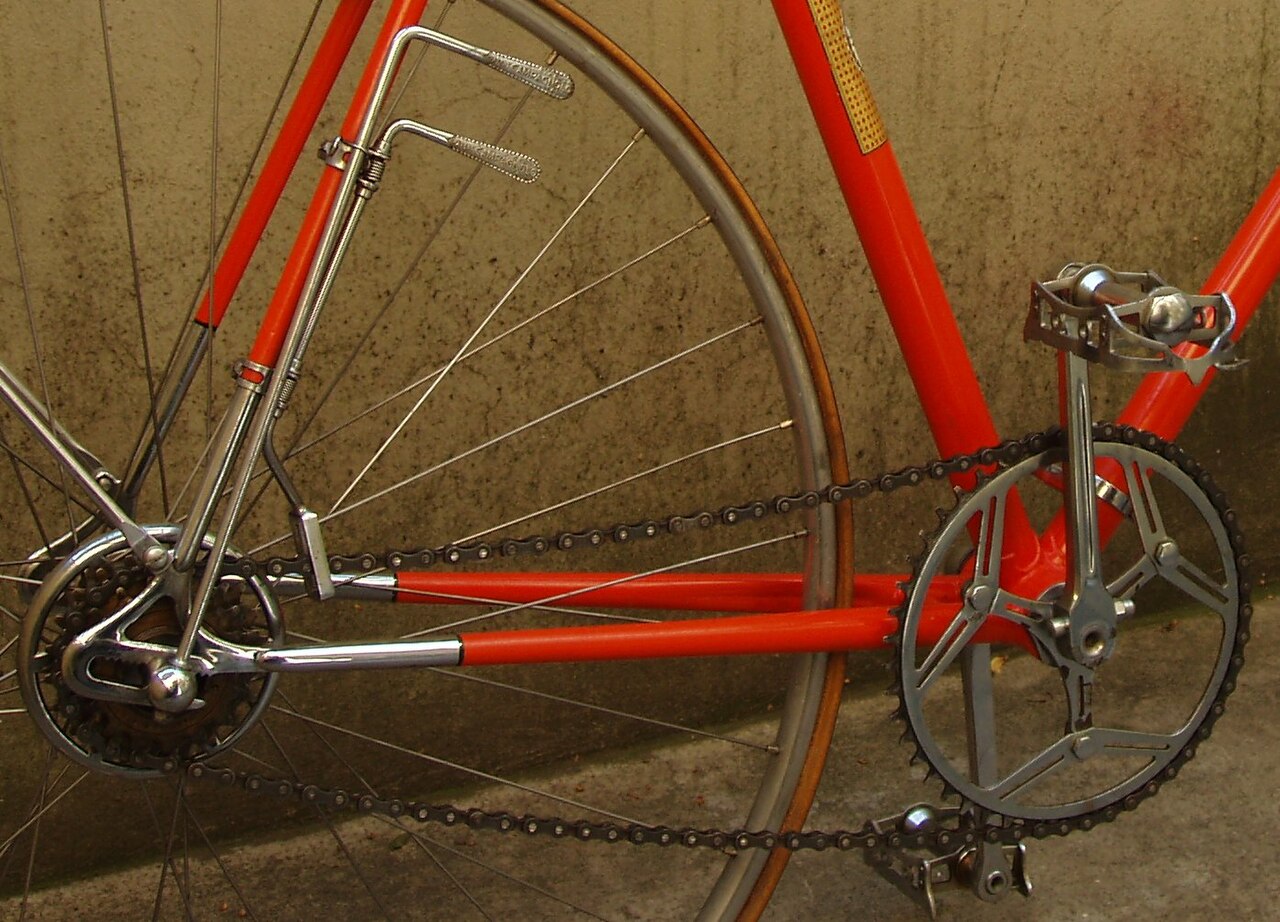
For years the Tour banned the derailleur; to change gear a rider had to stop, pull the rear wheel, and flip it to a different cog. Not until 1937 were riders finally allowed to shift on the move. Now you could trade speed for turning force at will — drop into a low gear and multiply your torque to crawl up a mountain that used to mean walking.
One rider, many machines, chosen with a flick of the thumb.
cadence
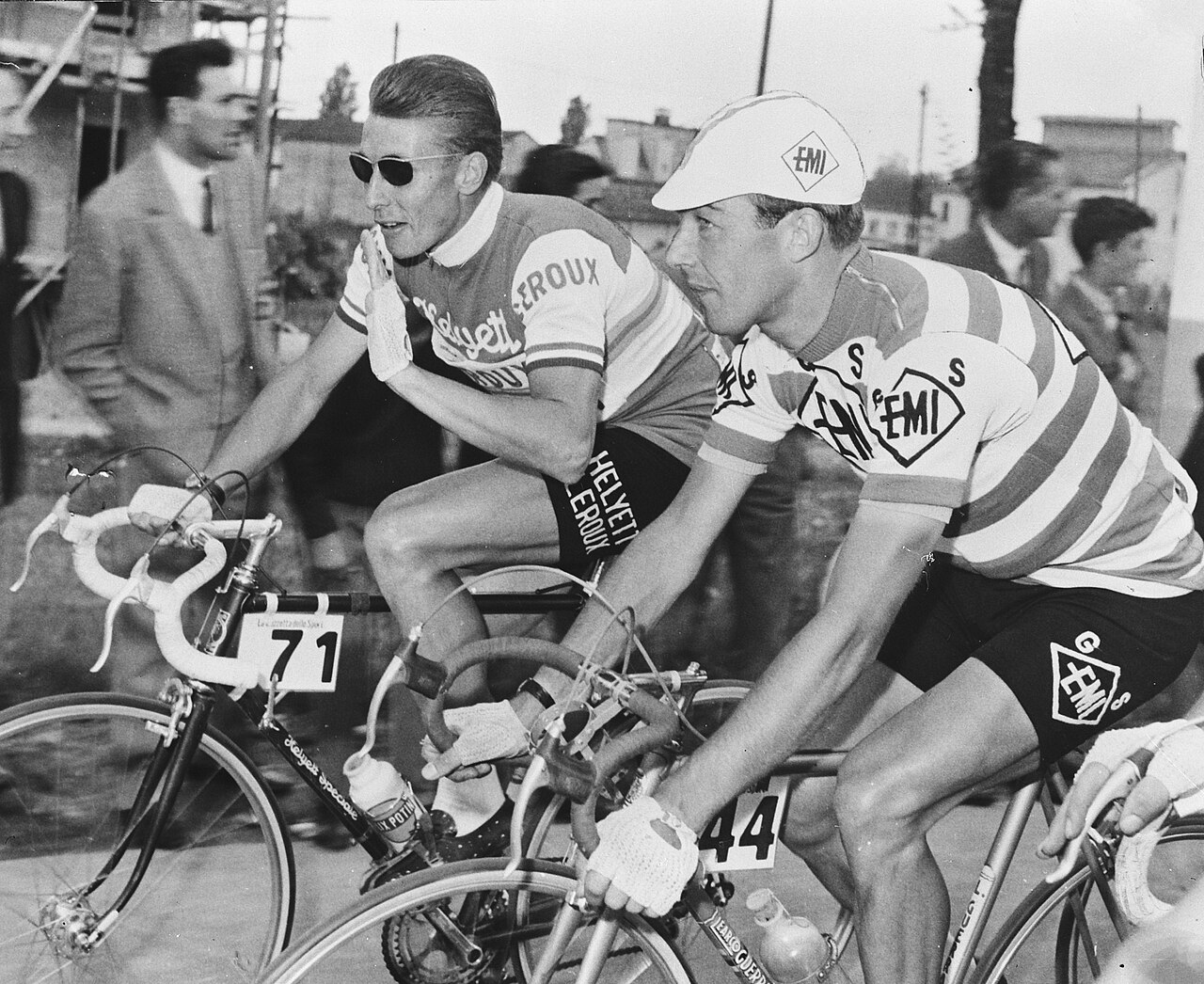
With gears settled, the last thing to master was rhythm. Champions like Anquetil win on a smooth, metronomic spin rather than brute force — the revolutions per minute of the crank become a discipline of their own. Today a sensor counts every turn, and riders train to hold a perfect cadence for hours.
After two centuries of iron and air, what's left to refine is the tempo of the legs.